Evolve Medical Evolve Medical

China Top 10 Diabetic Wound Care Consumables?

Time:2026-10-01 Author:Oliver
0%

Diabetic wounds can deteriorate quickly, even when the opening looks minor. A red edge, unusual odor, or damp dressing may signal a deeper problem. Effective care requires clinical assessment, pressure relief, infection evaluation, and suitable wound consumables. This guide introduces China’s top 10 diabetic wound care consumables through a practical, evidence-informed lens. So, What are the best consumables for diabetic wound care? The answer depends on wound depth, exudate level, tissue condition, patient mobility, and professional judgment.

The products discussed may include foam dressings, alginate dressings, hydrocolloids, hydrogels, antimicrobial dressings, absorbent pads, wound cleansers, compression-related materials, fixation tapes, and debridement-support products. Each item serves a different purpose. A heavily exuding heel may need a highly absorbent dressing, while a dry wound may require controlled moisture. Sterile packaging matters. So does lot traceability. Chinese suppliers should provide clear product specifications, quality certificates, clinical documentation, and manufacturing information. ISO 13485 certification can support confidence, but it does not replace local regulatory review or clinical evidence.

This ranking is not an absolute medical verdict. Real-world suitability can be messier. A product that performs well in one clinic may fail when staff training, storage, or patient adherence changes. The selection process therefore considers material safety, ease of use, absorption, dressing-change comfort, supply stability, and transparent manufacturer communication. Wound specialists should confirm treatment choices for each patient. Persistent pain, spreading redness, fever, black tissue, or suspected infection requires urgent professional evaluation. The best consumable is not always the newest one. It is the product that supports safe, consistent, patient-centered care.
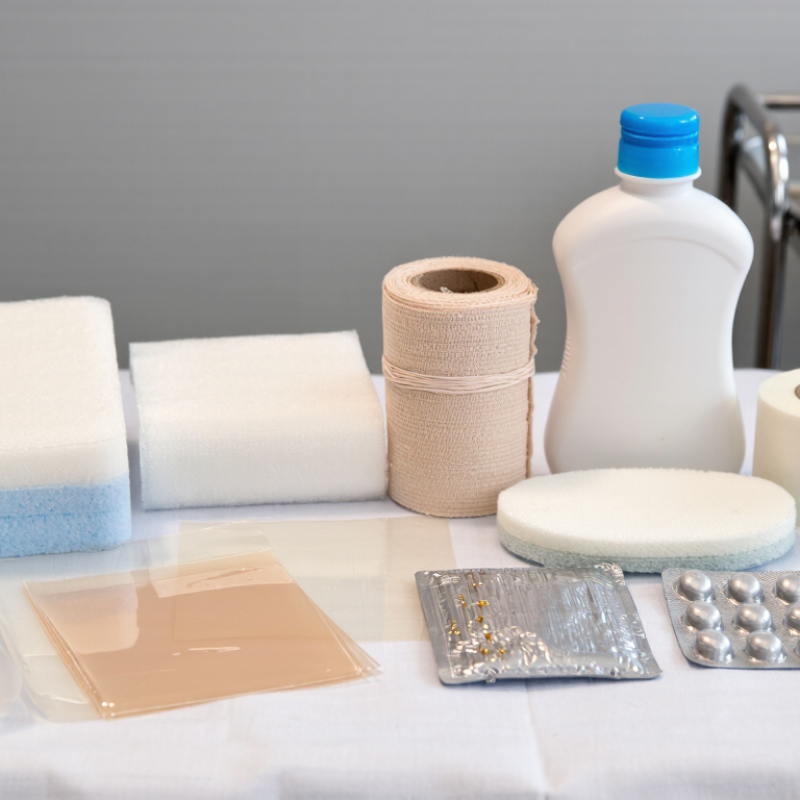
China Top 10 Diabetic Wound Care Consumables?

What Are Diabetic Wound Care Consumables?

Diabetic wound care consumables are single-use or limited-use medical products used to clean, protect, absorb, and support wound healing. They are not ordinary household supplies. Diabetic feet may have reduced sensation, poor circulation, and slower tissue repair, so a small blister can become serious.

Commonly used consumables in China include sterile saline, sterile gauze, non-woven wound pads, foam dressings, alginate dressings, hydrocolloid dressings, hydrogel dressings, transparent film, antimicrobial dressings, and cohesive bandages. Each product has a different purpose. Saline helps gently cleanse the wound. Gauze protects it. Foam and alginate products manage moderate or heavy drainage. Hydrogel can support moisture in a dry wound. Transparent film protects shallow areas while allowing visual checks.

In practice, selection should follow wound depth, drainage, odor, tissue condition, and surrounding skin. A dry heel should not receive the same dressing as a heavily exuding ulcer. That sounds obvious, yet mistakes happen. The wrong product may trap moisture or damage fragile skin during removal. Sterility, package integrity, expiry dates, and storage conditions also matter. Clinicians should assess circulation and infection risk before recommending care. Home users need clear instructions, because “clean” does not always mean “safe.” Regular review is essential, especially when redness, warmth, swelling, fever, or increasing pain appears. Pain may be absent, unfortunately.

China Top 10 Diabetic Wound Care Consumables: What Are They?

The chart presents ten commonly used consumable categories in diabetic wound management, ranked by routine clinical relevance. The ranking focuses on wound assessment, cleansing, infection control, exudate management, protection, and offloading rather than company or brand performance.

Clinical relevance index: 1–10, based on routine use across diabetic foot wound assessment and treatment pathways. Categories include products commonly referenced in clinical wound-care practice, such as dressings, cleansing solutions, fixation materials, and offloading supplies. This is not a market-share or sales chart.

Reference framework: International Working Group on the Diabetic Foot (IWGDF) guidance, NICE diabetic foot guidance, and World Health Organization wound-care principles.

How Are China’s Top Diabetic Wound Care Consumables Selected?

China’s top ten diabetic wound care consumables should be selected through clinical value, not sales volume alone. The IDF Diabetes Atlas, 10th edition, estimated 140.9 million Chinese adults had diabetes in 2021. This creates substantial demand for safe, scalable wound management.

The selection should examine ten practical categories: foam dressings, alginate dressings, hydrocolloids, hydrogels, collagen dressings, antimicrobial dressings, transparent films, sterile gauze, absorbent pads, and fixation materials. Each category needs evidence for exudate control, moisture balance, infection risk, skin protection, and painless removal. The World Health Organization stresses that diabetic foot care requires early assessment, infection management, pressure relief, and trained professionals. Therefore, a dressing cannot be judged separately from clinical workflow.

Evidence is uneven. That matters. Selection teams should review randomized trials, post-market safety data, sterilization records, and local hospital feedback. They should also compare unit cost, shelf life, packaging integrity, and availability in smaller Chinese hospitals. A 2023 International Working Group on the Diabetic Foot guideline emphasizes structured prevention and risk-based care, rather than routine treatment for every patient. Products with clear indications deserve higher consideration. However, some published studies use small samples or short follow-up periods. That weakness should remain visible. Real-world data from Chinese patients, including rural and elderly groups, may change the ranking over time.

What Are the Top 10 Diabetic Wound Care Consumable Categories?

Diabetic wound care consumables are best understood by function, not by price or packaging. The ten main categories include sterile gauze, nonwoven dressings, transparent films, foam dressings, hydrocolloids, alginates, hydrofiber materials, antimicrobial dressings, collagen dressings, and wound cleansing solutions. Each category addresses a different need, such as exudate control, moisture balance, protection, or gentle removal of surface debris.

Sterile gauze remains useful for cushioning and secondary coverage. Foam can manage moderate drainage, while alginate suits heavily exuding wounds.

Hydrocolloid and film products may protect selected shallow wounds, but they are not suitable for every infected or heavily draining site.

Clinical assessment must guide product selection. A trained professional should check circulation, sensation, infection signs, wound depth, and surrounding skin before recommending consumables. Antimicrobial products may help reduce microbial burden, but they should not replace debridement or medical treatment when infection is suspected. Collagen materials can support the wound environment, yet evidence and suitability vary. The boundary between categories can blur. That matters.

In practice, purchasing teams should examine sterility, absorbency, conformability, package integrity, and documented performance. A dressing that looks advanced may still fail when it cannot stay in place on a moving foot. Cleansing solutions should be gentle and appropriate for wound tissue. Some lists also mention negative-pressure supplies, but these require equipment, training, and close monitoring, so they deserve separate consideration. No category works universally. Even experienced teams may need to revise a dressing plan when drainage, odor, or skin condition changes.

How Do These Consumables Differ in Use and Performance?

China Top 10 Diabetic Wound Care Consumables

Diabetic wound consumables differ mainly in moisture control, protection, and handling. Sterile saline is gentle for routine cleansing, but it does not remove heavy debris alone. Antimicrobial solutions may support infection management, yet prolonged use can irritate fragile tissue. Use clinical judgment.

Gauze is affordable and useful for packing or absorbing light drainage. It can stick to a dry wound. Foam dressings cushion pressure areas and manage moderate exudate, while alginate dressings absorb heavier fluid and support cavity filling. Hydrofiber materials form a soft gel, reducing disturbance during removal. Hydrocolloids maintain moisture and suit selected shallow wounds, but they are unsuitable for untreated infection or heavily draining ulcers. Transparent films protect against friction and moisture, although they offer little absorption.

Details matter. A clean, shallow wound may need a non-adherent contact layer and gentle fixation. A deep wound needs careful assessment, not simply more packing. Offloading pads can reduce pressure around the ulcer, but poor placement may shift pressure elsewhere. I have seen dressing changes fail because the product was chosen before checking circulation, sensation, drainage, and wound depth. That mistake is easy to repeat. Nurses and wound specialists should document size, odor, tissue type, and surrounding skin at each review. Any suspected infection, ischemia, or rapid deterioration requires prompt medical assessment.

How Should Buyers Evaluate Chinese Diabetic Wound Care Products?

Evaluating Chinese diabetic wound care consumables requires more than comparing prices. Buyers should examine foam dressings, hydrocolloids, alginates, hydrogels, gauze, films, cleansing products, and related supplies by clinical purpose. Check material safety, fluid absorption, moisture control, skin compatibility, and ease of removal. A dressing that performs well on a dry ulcer may fail on a heavily exuding wound. Product specifications must match real treatment conditions.

Ask suppliers for sterilization records, batch traceability, shelf-life data, packaging tests, and quality certificates relevant to your target market. Independent laboratory reports are more useful than promotional claims. Request samples, then assess adhesion, tearing, leakage, and comfort during handling. Verify whether clinical evidence reflects diabetic wounds, not only general skin injuries. Factory audits can reveal storage problems or inconsistent procedures. They require time.

Tips: Compare at least three suppliers. Record every test result. Confirm the manufacturing date. Check instructions in clear English. Discuss returns before ordering. Ask who handles complaints. A small pilot order is safer than a large commitment.

Buyers should also review supplier experience, production capacity, and responsiveness after delivery. A professional sales response is helpful, but technical answers matter more. I have found that attractive packaging can distract from weak documentation. My evaluation can still miss hidden risks, especially when overseas communication is limited. Use qualified wound-care professionals to review suitability, and confirm local regulatory requirements before purchase. Price matters, but predictable quality matters more.

China Top 10 Diabetic Wound Care Consumables? - How Should Buyers Evaluate Chinese Diabetic Wound Care Products?

No. Consumable Category Main Clinical Function Most Suitable Wound Characteristics Key Product Specifications to Compare Important Buyer Evaluation Points Typical Limitations and Cautions
1 Foam Dressings Absorb exudate, protect the wound, and maintain a moist healing environment while reducing friction. Low to heavily exuding Superficial wounds Pressure-prone areas Absorption capacity, fluid-retention performance, conformability, adhesive or non-adhesive design, waterproof outer layer, dressing thickness, and wear time. Check absorbency using standardized test methods, skin-friendly adhesive performance, clean removal, edge sealing, packaging integrity, and lot-to-lot consistency. May not be suitable for dry wounds or wounds with exposed tendon, bone, or poorly protected structures. Excessive moisture can cause maceration.
2 Hydrocolloid Dressings Form a moist gel when in contact with wound fluid and provide a protective barrier against external contamination. Low to moderate exudate Shallow wounds Granulating wounds Gel-forming composition, adhesion strength, wear time, water resistance, edge flexibility, backing-film breathability, and residue after removal. Verify compatibility with sensitive diabetic skin, predictable gel formation, odor control, package sterilization, and clear application instructions. Not generally appropriate for infected, highly exuding, or deep wounds. Removal may damage fragile surrounding skin if adhesion is excessive.
3 Calcium Alginate Dressings Absorb wound fluid and form a soft gel that supports hemostasis and atraumatic removal. Moderate to heavy exudate Cavity wounds Bleeding surfaces Alginate fiber composition, absorbency, wet and dry tensile strength, gel integrity, conformability, and whether a secondary dressing is required. Compare fiber uniformity, retention of fibers in the wound, wet-strength performance, traceability, sterilization validation, and ease of removal. Should not be used on dry or minimally exuding wounds because the dressing may adhere and delay removal.
4 Hydrofiber and Gelling Fiber Dressings Vertically absorb exudate and convert it into a cohesive gel to help contain fluid and reduce lateral spread. Moderate to heavy exudate Irregular wound beds Cavity filling Vertical wicking, absorbency under pressure, gel cohesion, wet integrity, fluid-locking capability, conformability, and secondary dressing requirements. Request laboratory test reports, confirm performance with simulated wound fluid, inspect fiber uniformity, and verify that removal does not leave excessive residue. Usually requires a secondary dressing and sufficient wound moisture to gel properly. Not intended for dry wound beds.
5 Hydrogel Dressings Donate moisture, soften devitalized tissue, and support autolytic debridement in selected wounds. Dry or necrotic wounds Low exudate Painful wound beds Water content, cooling effect, moisture retention, viscosity, conformability, pH, packaging, and compatibility with a secondary dressing. Evaluate microbial control, leakage resistance, ease of application, storage stability, skin tolerance, and instructions for use after opening. Can increase moisture and maceration in heavily exuding wounds. Necrotic tissue may require clinical assessment and other forms of debridement.
6 Antimicrobial Silver Dressings Provide localized antimicrobial activity as part of an overall strategy for managing bioburden. Clinically indicated bioburden Exuding wounds Short-term use Silver content, release profile, antimicrobial spectrum, activity in the presence of wound fluid, cytotoxicity data, absorbency, and dressing construction. Require evidence for antimicrobial performance, risk assessment, shelf-life stability, regulatory documentation, and clear guidance on duration of use. Not a substitute for debridement, pressure relief, vascular assessment, glucose management, or systemic treatment when indicated. Avoid indiscriminate long-term use.
7 Iodine-Based Antimicrobial Dressings Release iodine locally to help reduce microbial load in selected wounds. Exuding wounds Suspected local bioburden Short-term treatment Available iodine content, release behavior, antimicrobial testing, moisture requirements, dressing integrity, and maximum recommended contact time. Check contraindication information, thyroid-related warnings, pregnancy-related guidance, interaction information, packaging, and stability data. Use requires clinical judgment. Particular caution may be needed for thyroid disorders, iodine sensitivity, pregnancy, and prolonged or extensive application.
8 Nonwoven Gauze and Absorbent Pads Provide basic wound coverage, mechanical protection, cleansing support, and exudate absorption. Routine wound coverage Low to moderate exudate Secondary dressing Material composition, basis weight, absorbency, lint level, wet strength, edge construction, sterility, and package configuration. Compare fiber shedding, liquid absorption, skin contact comfort, sterilization assurance, carton efficiency, and consistency across production lots. May adhere to a drying wound bed and can require frequent changes. Gauze alone does not provide advanced moisture management.
9 Transparent Film Dressings Protect the wound from external contamination while allowing visual inspection and helping reduce friction. Superficial wounds Low exudate Device fixation Water-vapor transmission rate, oxygen permeability, conformability, adhesion, transparency, tear resistance, and ease of removal. Assess adhesive performance on fragile or moist skin, application accuracy, wrinkle resistance, packaging usability, and compatibility with cleansing products. Does not absorb significant exudate and may trap moisture. Avoid use as the sole dressing for heavily exuding or clinically infected wounds.
10 Skin Barrier Films and Protective Wipes Protect periwound skin from moisture, adhesive trauma, and irritants associated with exudate or frequent dressing changes. Macerated periwound skin Fragile skin Frequent dressing changes Drying time, film uniformity, breathability, resistance to moisture, non-stinging formulation, compatibility with adhesives, and removal requirements. Check dermatological safety data, solvent and fragrance content, flammability information where relevant, applicator hygiene, and shelf-life stability. Apply only to intact or appropriately assessed periwound skin. It is not a wound filler, antimicrobial treatment, or substitute for managing the cause of exudate.
Buyer evaluation principle: Product selection should be based on wound condition, exudate level, infection status, vascular supply, pressure relief, patient skin tolerance, and clinical protocol. For Chinese suppliers, buyers should also verify applicable regulatory registration, ISO 13485 quality systems, sterilization validation, biocompatibility evidence, shelf-life data, batch traceability, packaging integrity, and independent performance-test reports.

FAQS

How should diabetic wound care consumables be selected?

Select them by clinical value, not sales volume alone. Check drainage, wound depth, infection signs, circulation, sensation, and surrounding skin. Product rankings can change.

What are the main consumable categories?

Common categories include sterile gauze, foam, alginate, hydrocolloid, hydrogel, collagen, antimicrobial dressings, transparent films, absorbent pads, and fixation materials. Cleansing solutions are also widely used.

Which dressing suits heavy wound drainage?

Alginate and highly absorbent materials can manage heavier drainage. They may support cavity filling. Deep wounds still require professional assessment.

When are foam dressings useful?

Foam dressings can cushion pressure areas and manage moderate drainage. They may help protect a moving foot. Poor fixation can still cause failure.

Are hydrocolloid and transparent film dressings suitable for every wound?

No. Hydrocolloids may suit selected shallow wounds with limited drainage. Films protect against friction and moisture but absorb very little. Neither replaces infection management.

What are the limitations of antimicrobial products?

They may help reduce microbial burden. They do not replace debridement or medical treatment when infection is suspected. Prolonged use may irritate fragile tissue.

Why does wound assessment matter before choosing a dressing?

A dressing cannot be judged separately from clinical workflow. Professionals should check circulation, sensation, wound depth, drainage, odor, and skin condition. The wound changes.

What should purchasing teams evaluate besides clinical performance?

They should review sterility, absorbency, conformability, shelf life, package integrity, unit cost, and supply availability. Smaller hospitals may face different purchasing limits.

How should dressing performance be monitored over time?

Document wound size, tissue type, odor, drainage, and surrounding skin during each review. Change the plan when conditions shift. Evidence remains uneven.

What weaknesses should selection teams acknowledge?

Some studies use small samples or short follow-up periods. Local evidence may be incomplete. Rural and elderly patient data could change future rankings. That uncertainty matters.

Conclusion

This article explains the role of diabetic wound care consumables in supporting wound cleansing, moisture management, infection prevention, tissue protection, and healing. It introduces how China’s leading products can be selected by considering material safety, absorbency, breathability, sterility, usability, quality consistency, and compliance with relevant medical requirements. It also outlines ten major consumable categories, including wound dressings, gauze, foam, alginate, hydrogel, antimicrobial materials, transparent films, cleansing products, fixation supplies, and protective accessories.

The article compares these consumables according to their suitable wound stages, exudate levels, application methods, comfort, replacement frequency, and storage requirements. It also provides practical guidance for buyers evaluating Chinese diabetic wound care products, such as reviewing technical documentation, manufacturing quality systems, test reports, packaging integrity, supply capacity, and after-sales support. By matching product performance with clinical needs and purchasing standards, readers can better answer the question: What are the best consumables for diabetic wound care?

Oliver

Oliver

Oliver is a seasoned marketing professional with a wealth of expertise in driving brand awareness and engagement. With a deep understanding of our company's product offerings, he consistently delivers high-quality content that enriches our professional blog. His insights not only shed light on......